
TLDR
Colonial Spanish horse movement is varied rather than defined by one universal gait. Many horses in this heritage group can perform an intermediate or ambling gait, while others are conventional walk-trot-canter horses. Neither pattern is automatically better. Look for rhythm, balance, symmetry, relaxed transitions, appropriate stride length, and consistent movement on both reins. Assess the actual horse over the footing and at the speeds you expect to ride, and investigate movement that is uneven, reluctant, shortened, or deteriorating.
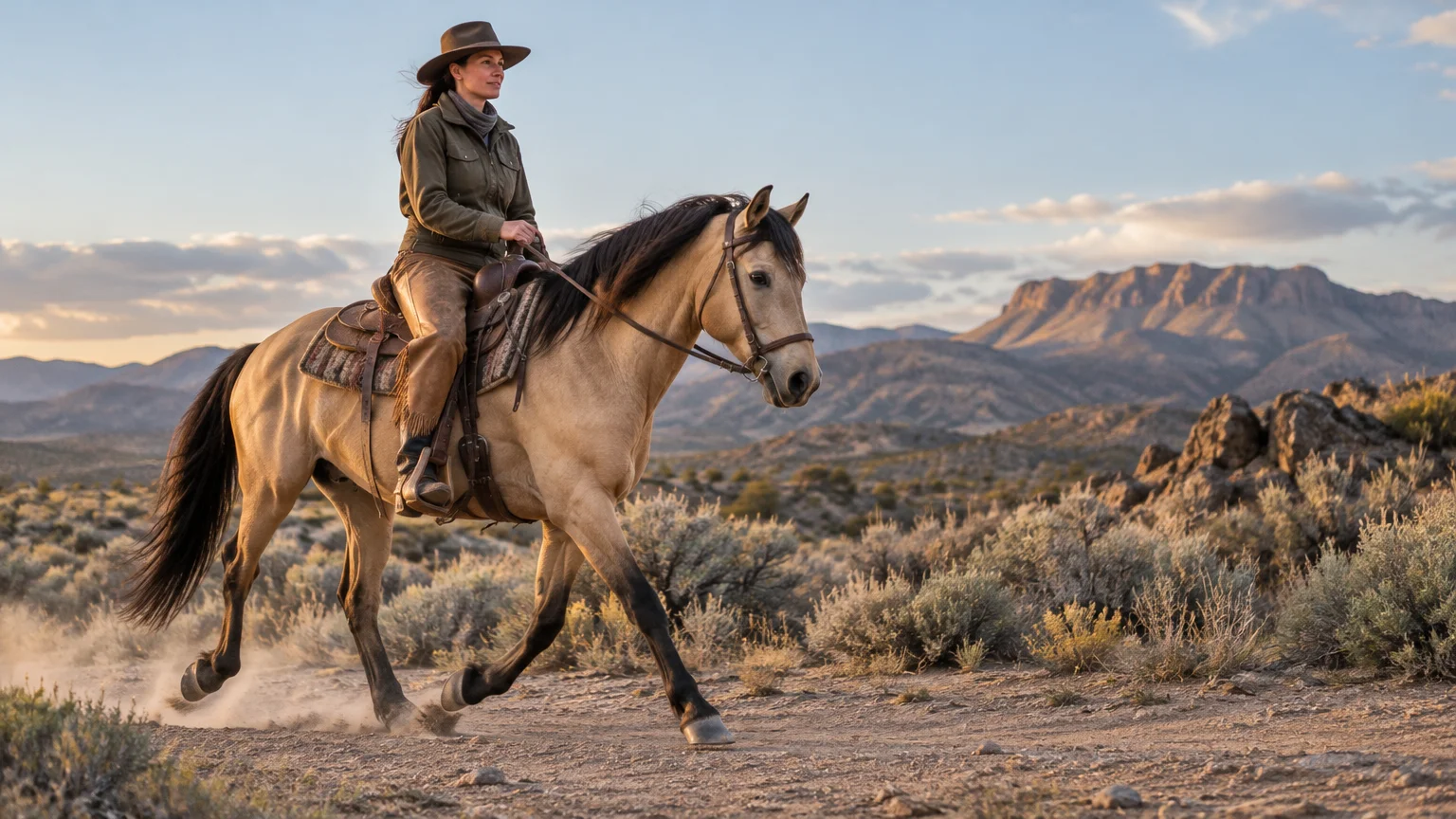
The most useful way to understand Colonial Spanish horse movement is to set aside the idea of a single breed-wide gait. Colonial Spanish horses are a group of related breeds and strains descended from horses brought to the Americas by Spanish explorers, colonists, and conquerors, not one modern breed governed by a single movement standard. The Livestock Conservancy describes an unusually long stride within the group and notes that many, but not all, of these horses are gaited. The Livestock Conservancy’s Colonial Spanish Horse overview names the running walk, single-foot, amble, pace, and paso among gaits found in some strains.
For an owner or prospective buyer, the early answer is simple: judge the individual. A sound, balanced horse that trots normally may represent its heritage just as meaningfully as one that offers a smooth intermediate gait. A gaited label does not by itself establish comfort, soundness, trail ability, or suitability for a particular rider.
What good Colonial Spanish horse movement looks like
Descriptions such as “long-striding,” “ground-covering,” and “efficient” are useful only when they are tied to observable movement. A long stride should not merely reach far in front. The horse should move through its body without rushing, dragging its toes, losing rhythm, or appearing to strain for every step.
Ground-covering movement means that the horse travels a useful distance with each relaxed stride. On the trail, that can help a horse make steady progress without relying on constant speed. Efficiency is more difficult to judge from appearance alone, but practical signs include an economical rhythm, minimal unnecessary tension, a back that can swing, and the ability to maintain the chosen gait without repeated correction.
Balance does not mean that the horse must carry itself like a finished arena horse. It means the horse can control its direction and tempo, negotiate transitions without falling heavily forward, and adjust its body when the grade or footing changes. A naturally low or compact way of going may still be balanced. High knee action, dramatic reach, or speed can attract attention, but none of them proves quality by itself.
Trot and intermediate gait are different, not opposing, options
The conventional trot is a two-beat diagonal gait. An intermediate gait is a broad practical term for movement between the walk and canter that is not simply a conventional trot. Depending on the horse and strain, it may involve a stepping, lateral, or other distinct footfall pattern. Riders often perceive less vertical bounce in some intermediate gaits, but smoothness depends on rhythm, speed, training, conformation, saddle fit, and the individual rider as well as footfall sequence.
| Feature | Conventional trot | Intermediate or ambling gait |
|---|---|---|
| Basic pattern | Two-beat diagonal rhythm | Pattern varies; may be stepping, lateral, or otherwise distinct from a conventional trot |
| Typical rider experience | Often includes a clear moment of rise and fall; riders may post or sit | May feel smoother with less vertical motion, although comfort varies by horse and speed |
| Colonial Spanish relevance | Normal and acceptable in horses that do not offer another gait | Found in many, but not all, horses and represented by several named gaits across strains |
| What matters most | Regular rhythm, symmetry, balance, willingness, and soundness | Consistent footfalls, relaxation, symmetry, balance, willingness, and soundness |
A horse can also change its pattern as speed, tension, footing, or rider influence changes. That is one reason a brief pass in a sale video is not enough to identify or evaluate a gait. Slow the footage if necessary, but also watch the horse repeatedly in real time. The quality of the whole performance matters more than finding one photogenic sequence of footfalls.
Why there is no single “Colonial Spanish gait”
Research supports a more careful view of gait within this heritage group. A preliminary study published in 2025 examined intermediate-gait parameters among seven Colonial Spanish-related breeds and found variation among breeds and between slower and faster test speeds. Sampled Choctaw and Florida Cracker horses showed stepping gaits at both tested speeds. Several other sampled breeds showed a stepping gait at the slower speed, while the sampled Wilbur-Cruce Mission horses displayed a diagonal leaping gait in both tests. These results describe the horses and conditions studied; they do not guarantee how every member of those breeds will move. Review the preliminary intermediate-gait study for its methods and reported breed-level observations.
Genetics are part of the explanation, but a genetic result should not become a shortcut for judging a horse. Research has linked mutations in DMRT3 with locomotor patterns and alternative gait ability in horses. That does not mean a test result can prove the exact gait an individual will perform, how comfortable it will feel, whether the horse is sound, or whether it will suit trail riding.
Preservation-minded selection should therefore avoid making one gait a universal test of authenticity. Movement belongs in a larger picture that includes documented ancestry, conformation, temperament, health, historic strain characteristics, and the work expected of the horse.
A practical movement-observation checklist
Watch a horse in hand or at liberty before adding the influence of a rider. Then, when appropriate, observe it under saddle with a capable rider. Use safe, familiar footing and avoid manufacturing speed merely to make an intermediate gait appear.
- Begin at the walk. Look for a regular four-beat rhythm, relaxed use of the neck and back, comparable steps on the left and right, and a willingness to walk straight.
- Observe the horse moving directly away from and toward you. Compare limb flight and placement, but remember that conformation can influence how legs travel without necessarily indicating pain.
- Watch both directions on a large circle. Note whether the horse maintains rhythm, bends comfortably, and moves with similar confidence on each rein.
- Ask for ordinary transitions. The horse should be able to move forward and return to a slower gait without scrambling, bracing, or repeatedly breaking its rhythm.
- Observe the trot even if the horse is described as gaited. A veterinary or purchasing assessment may require more than the horse’s preferred intermediate gait.
- Let the horse offer its natural intermediate gait without extreme collection, forced head position, heavy rein contact, or excessive speed. Note the footfall pattern and whether it remains consistent.
- Repeat the observation on more than one suitable surface when possible. Firm level ground can reveal different details from a soft arena, but unsafe, slippery, or excessively deep footing proves little.
- If the horse will be ridden, watch it under saddle. Compare its movement with and without a rider while accounting for the rider’s balance and cues.
Record short videos from the side, front, and rear, along with the date, surface, direction, speed, and whether the horse was handled in hand, loose, or ridden. That turns a vague impression into a record that can be compared over time. Identification photos and health records can be organized alongside these clips using the same principles described in documenting a Sulphur Mustang’s markings, history, and ownership records.
A worked example: evaluating a trail prospect
Suppose a prospective trail horse walks freely, trots evenly, and occasionally offers a smooth four-beat intermediate gait when moving faster than the walk. On level ground, the horse holds that gait for several strides. On a circle, however, it loses rhythm and becomes tense.
That observation does not immediately prove a defect or a desirable specialty gait. The horse may lack strength, balance, training, or confidence on a circle. Rider cues, hoof balance, tack, surface, and discomfort are also possible influences. A sensible next step is to repeat the observation calmly in both directions, compare movement in hand and under saddle, and ask how long the horse has been trained to maintain the gait.
For a trail buyer, the decisive question is not whether the gait has an impressive name. It is whether the horse can walk, turn, transition, climb, descend, and travel at a sustainable pace without distress or loss of control. A smooth gait on a straight, level lane is useful, but it does not replace balance on uneven ground.
Terrain changes the movement you need
Movement should be evaluated in relation to the horse’s intended work. On open, level ground, a long stride and steady intermediate gait may help horse and rider cover distance comfortably. On rocky or twisting trails, deliberate foot placement and the ability to shorten the stride may matter more than speed or reach.
Uphill travel asks the horse to organize its body and produce controlled forward effort. Descending safely calls for balance, restraint, and confidence rather than rushing. Mud, loose rock, deep sand, and hard-packed roads each alter traction and effort. No gait makes a horse automatically sure-footed, and no brief demonstration can establish endurance.
When trying a horse for trail use, prioritize the conditions you will actually encounter. If a safe trial is possible, observe ordinary obstacles, modest grades, stops, turns, and changes of pace. Do not demand difficult terrain merely as a test, especially from a horse whose conditioning or training history is uncertain.
Natural variation versus a possible soundness problem
An unusual rhythm should not automatically be celebrated as a breed trait, nor should every unconventional footfall be treated as lameness. The responsible approach is to observe the horse across more than one gait, direction, transition, and suitable surface. When relevant, movement should also be assessed under saddle because weight, tack, and rider influence can reveal or create differences. This broader approach is consistent with AAEP-associated educational material on evaluating gait abnormalities. AAEP-associated equine gait evaluation material provides veterinary context for examining movement systematically.
Seek an independent equine veterinarian when movement is newly uneven, reluctant, shortened, painful-looking, or deteriorating. Other warning signs include repeated stumbling, toe dragging, difficulty turning, resistance during transitions, a marked difference between directions, or a gait that appears only when the horse is tense or driven beyond a comfortable speed. A pre-purchase examination is especially important when the horse’s future work will involve distance, difficult terrain, or regular riding.
What this means for Sulphur horses
The Bureau of Land Management states that the Sulphur Herd has mixed over time with escaped ranch livestock and that some horses retain many Colonial Spanish traits. The BLM’s Sulphur Herd Management Area profile provides the official public-land context. That history supports careful individual documentation rather than a population-wide assumption about gait.
The available evidence does not establish one documented gait profile for all Sulphur horses. A Sulphur horse may show movement consistent with traits described in parts of the wider Colonial Spanish group, but heritage should not be inferred from smoothness alone. Preserve the horse’s known history, adoption or ownership paperwork, photographs, pedigree information where available, and dated movement videos. Readers who are sorting out related terminology can also consult this guide to Sulphur, Mustang, Colonial Spanish, color, and conformation terms.
Choose the horse, not the label
The best next step is to write down the work you expect the horse to do and assess movement against that list. Watch the horse at the walk, trot, canter where appropriate, and any naturally offered intermediate gait. Compare both directions, several transitions, and safe surfaces. Ask whether the horse remains relaxed, rhythmic, balanced, and willing at the speeds you will actually use.
Treat “gaited,” “Colonial Spanish,” and “ground-covering” as starting points for observation, not conclusions. A comfortable intermediate gait can be a valuable natural characteristic. So can an honest, balanced trot. The preservation-minded choice is the horse whose movement is sound and suitable, whose history is documented as carefully as possible, and whose individual qualities can be appreciated without forcing them into a single heritage stereotype.
References
- Colonial Spanish Horse – The Livestock Conservancy
- Spatiotemporal gait parameters associated with speed of the intermediate gaits of Spanish Colonial Horse breeds: A preliminary study – ScienceDirect
- Mutations in DMRT3 affect locomotion in horses and spinal circuit function in mice – PubMed
- EQUINE VETERINARY EDUCATION
- Utah – Sulphur HMA | Bureau of Land Management