
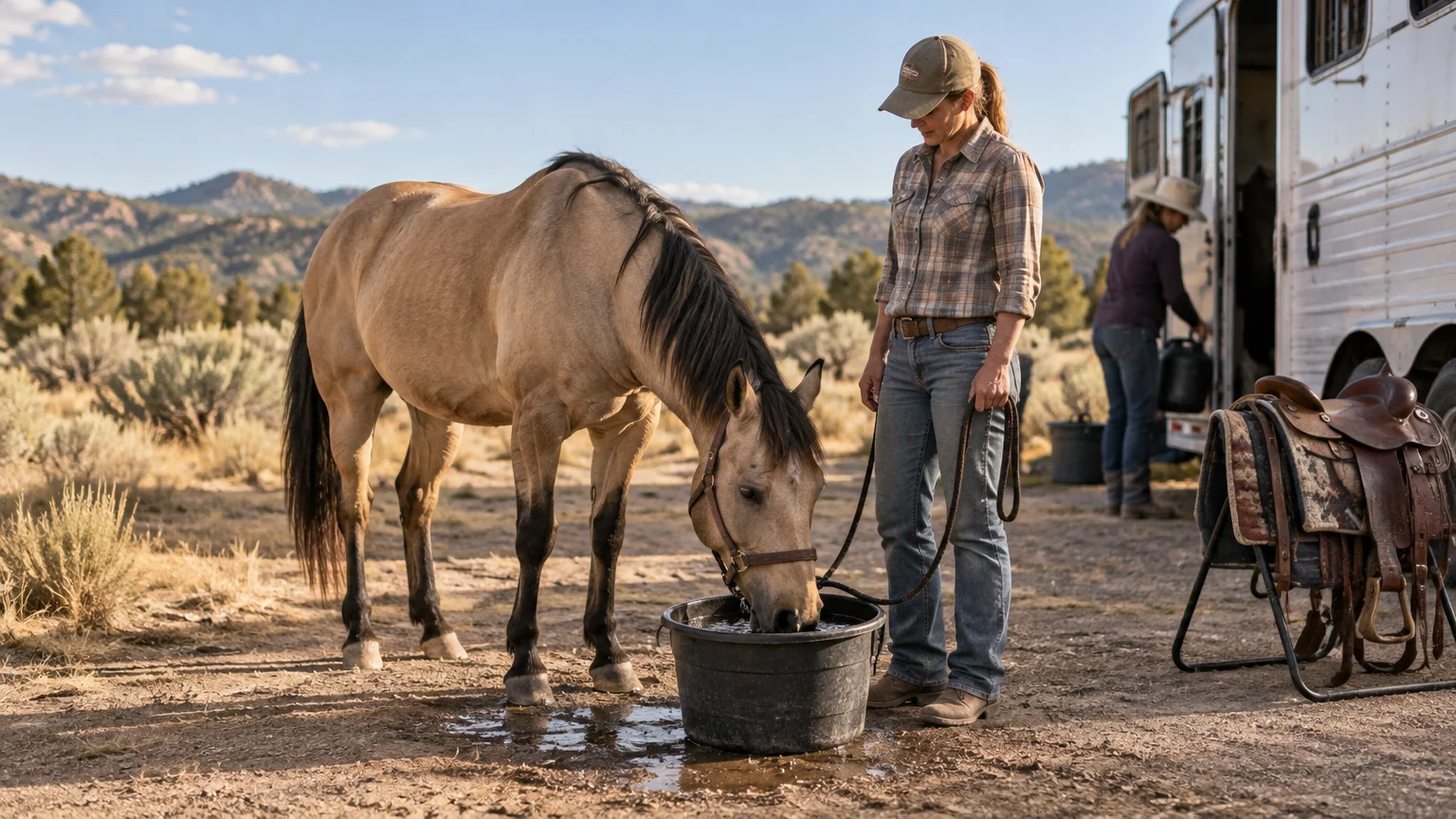
Good horse trail hydration begins before the trailer leaves the yard. Start with a horse that is drinking and behaving normally, confirm where dependable water will be available, and carry a backup when the route is uncertain. On the trail, offer clean water before the horse becomes markedly tired or thirsty rather than relying on one long drink after returning to the trailer.
There is no dependable gallons-per-mile rule for horse trail hydration. A quiet ride on a cool morning is not the same problem as a steep climb in humid weather. Temperature, humidity, terrain, pace, load, fitness, acclimation and the individual horse’s willingness to drink away from home all change the plan. The useful question is not merely how much water a horse needs, but whether that horse will drink the water available under the conditions you expect.
Plan around the horse, weather and route
A 1,000-pound horse commonly drinks about 8 to 10 gallons per day, according to the University of Minnesota Extension’s guidance on encouraging horses to drink, but heat and work can raise demand substantially. That daily range is a reference point, not an on-trail prescription. In hot conditions, a working horse may lose 2 to 4 gallons of sweat in an hour. Trying to replace a calculated volume at one stop misses two important realities: losses vary, and a horse cannot be forced to drink on schedule.
Examine the route before deciding what to carry. Check distance, elevation change, shade, footing and likely travel time. Confirm mapped troughs, creeks or springs with the land manager because drought, seasonal shutoffs, algae concerns, damaged pumps and access restrictions can change quickly. If missing one water source would leave the horse without a reasonable alternative, treat that source as unreliable and change the route, cache water where lawful, or arrange another backup.
| Ride conditions | Main concern | Practical preparation | Water strategy |
|---|---|---|---|
| Short, cool local ride | Complacency because the outing feels easy | Begin with a normally hydrated horse and carry water at the vehicle | Offer water before and after; add an on-route option if conditions change |
| Warm or humid day ride | Rapid heat accumulation and sweat loss | Start earlier, shorten the route, reduce pace and identify shade | Offer clean water at sensible opportunities while monitoring recovery |
| Remote ride with uncertain sources | A mapped source may be dry, inaccessible or unsuitable | Verify current conditions and carry or arrange backup water | Do not make ride safety depend on a single unconfirmed source |
| Overnight outing | Repeated losses plus reluctance to drink unfamiliar water | Bring a familiar bucket and, when practical, some water from home | Establish dependable camp water and keep plain water available |
| Heavy-sweat conditioning ride | Large water and electrolyte losses | Discuss the conditioning and electrolyte plan with a veterinarian or qualified equine nutrition professional | Offer water during recovery; electrolytes do not replace water |
Teach drinking away from home before demanding miles
Some horses refuse water that tastes or smells different from their home supply. A familiar bucket and water brought from home can help, especially during the first part of a trip. The U.S. Forest Service also notes that merely leading a horse to a public or unfamiliar source does not ensure that the horse will drink.
Practice this skill on easy outings. At a nearby trailhead or quiet day camp, offer water in the same bucket you plan to carry. Allow time without turning the stop into a struggle. A horse that learns to drink calmly beside the trailer, at camp and during a break is better prepared than one encountering every part of the routine for the first time on a hot, difficult ride.
Before departure, note the horse’s usual drinking, appetite, manure, attitude and general comfort. Clean the travel bucket and inspect water containers for residue or odors. Pack them where they remain clean and accessible rather than buried beneath tack. If a horse is already drinking poorly, seems unwell or is producing notably abnormal manure, a demanding trail ride is not the place to investigate the problem.
Use a repeatable on-trail sequence
A useful water stop involves more than presenting a creek. Reduce the work, choose safe footing and give the horse a chance to settle. Offer clean water, then reassess the whole horse rather than judging the ride by whether it took one sip or emptied a bucket.
- Slow the pace before the planned stop, especially after a sustained climb or fast work.
- Move to shade or a breezy resting place when one is available, without crowding other horses around the water.
- Offer clean water in a familiar container when practical. Avoid making an anxious horse defend its space at a communal trough.
- Watch breathing, attitude, coordination and willingness to drink. Compare these with what is normal for that individual.
- Allow recovery time and reconsider the remaining distance, terrain and weather. Turn back or shorten the loop if recovery is disappointing.
- Record what the horse drank and under what conditions after the ride. Those notes improve the plan for the next outing.
Do not wait for a rigid interval if the day is hotter, steeper or more humid than expected. Likewise, an opportunity to drink does not obligate the group to linger indefinitely if the horse is comfortable and declines. Offer water at sensible opportunities, observe carefully and preserve enough route flexibility to stop early.
A hot horse should be offered water
Water should not be withheld simply because a horse is hot. University of Minnesota Extension recommends offering a hot horse a few swallows of cool, fresh water every few minutes while cooling continues. Rest, remove unnecessary tack when it is safe to do so, move into shade and use appropriate cooling methods while continuing to observe the horse.
A drink is not proof that recovery is complete. Persistent distress, poor coordination or failure to recover normally calls for stopping the work and seeking professional advice, not remounting because the horse accepted water.
Treat electrolytes as a tool, not bottled hydration
Sweat carries electrolytes as well as water, so some working horses may benefit from an electrolyte plan. Hydration involves replacing both water and electrolytes, but the appropriate product, timing and amount depend on workload, diet, sweat loss and the horse’s health. Use an equine-specific product as directed and ask a veterinarian or qualified equine nutrition professional for individual guidance, particularly for prolonged work or a horse with a medical history.
Electrolytes are not a substitute for drinking. Freely available water is essential, and if an additive is placed in one bucket, offer a separate bucket of plain, fresh water. Do not improvise a concentrated home mixture or assume every horse on an ordinary ride needs the same dose. A horse that is already significantly depleted needs rest, water and appropriate veterinary direction rather than another demanding leg of the ride.
Protect natural and shared water sources
Clear water is not automatically safe, and a blue line on a map says nothing about current flow or local restrictions. Check public-land notices and ask the managing agency about stock-water rules. Avoid stagnant or visibly contaminated water, active algae advisories and any source the land manager identifies as unsuitable.
At a usable source, choose durable access rather than cutting down a soft bank. The U.S. Forest Service’s low-impact guidance for backcountry stock use supports avoiding vulnerable banks and using a bucket when that reduces damage. It also advises keeping stock away from human drinking-water sources where applicable. Follow posted rules, limit trampling in muddy margins and move the horse away once watering is finished.
A bucket can be especially useful where direct access would churn a bank, threaten sensitive vegetation or place the horse on unstable footing. It also gives the rider more control over cleanliness and reduces congestion when several animals need water. The best method protects both the horse and the source other visitors depend upon.
Know when the ride is over
No single field sign can tell a rider the exact degree of dehydration. Look instead for a concerning change from the individual horse’s normal condition. Unusual fatigue, weakness, poor coordination, persistent rapid breathing, abnormal attitude, dry mucous membranes, reduced interest in water or feed, or abnormal manure can all justify ending the work and assessing the horse more carefully.
If heat illness or significant dehydration is suspected, stop, seek shade, begin appropriate cooling, offer water and contact a veterinarian promptly. Do not ask the horse to continue to the planned turnaround merely because the trailer is farther ahead than behind. If the horse appears unstable or seriously ill, veterinary guidance should shape movement or transport rather than an improvised attempt to push onward.
Make the next easy ride a hydration rehearsal
Before a longer or hotter outing, choose an easy route and rehearse the complete water routine: travel with clean containers, offer water from the planned bucket, pause in a safe location and note what helps the horse drink. Then build a route-specific plan with verified sources and a realistic backup. That quiet rehearsal may tell you more than any generic mileage formula—and it gives the horse a fair chance to learn the job before the conditions become demanding.